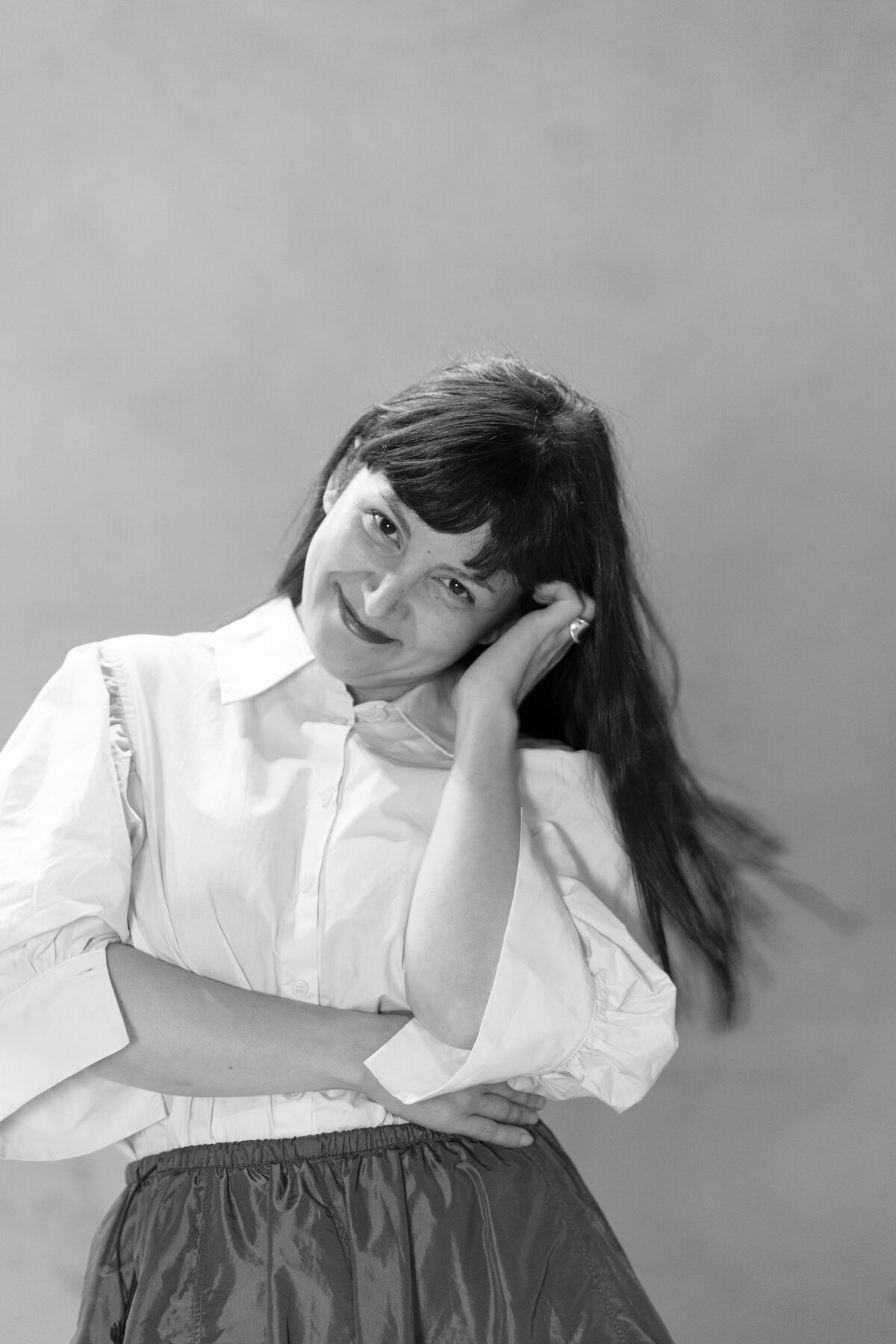
The first EMMA-Saastamoinen Curatorial Fellow, Shohreh Shakoory, has completed her research. The result is a fascinating article that follows Shakoory's authentic research intuition.
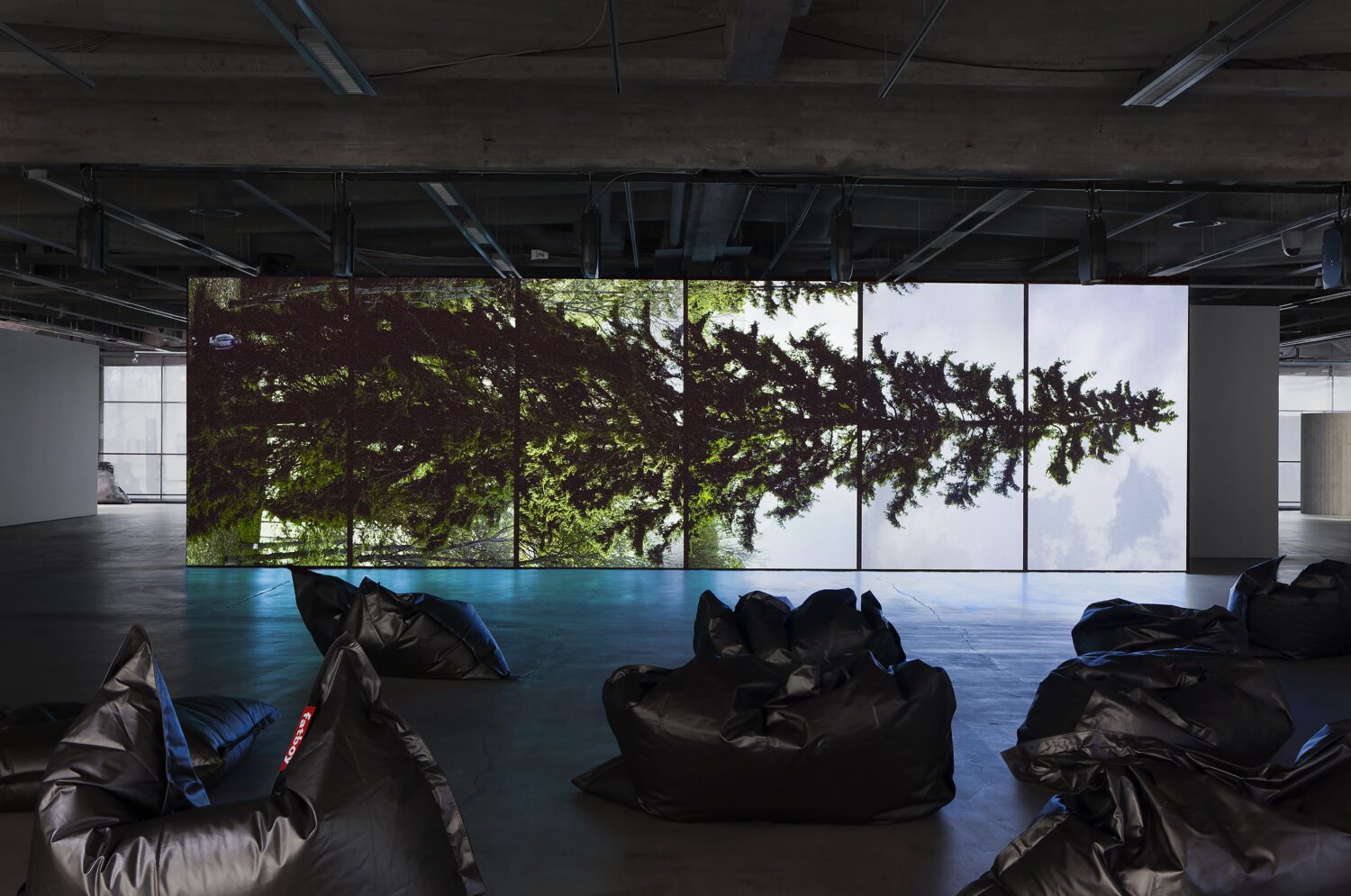
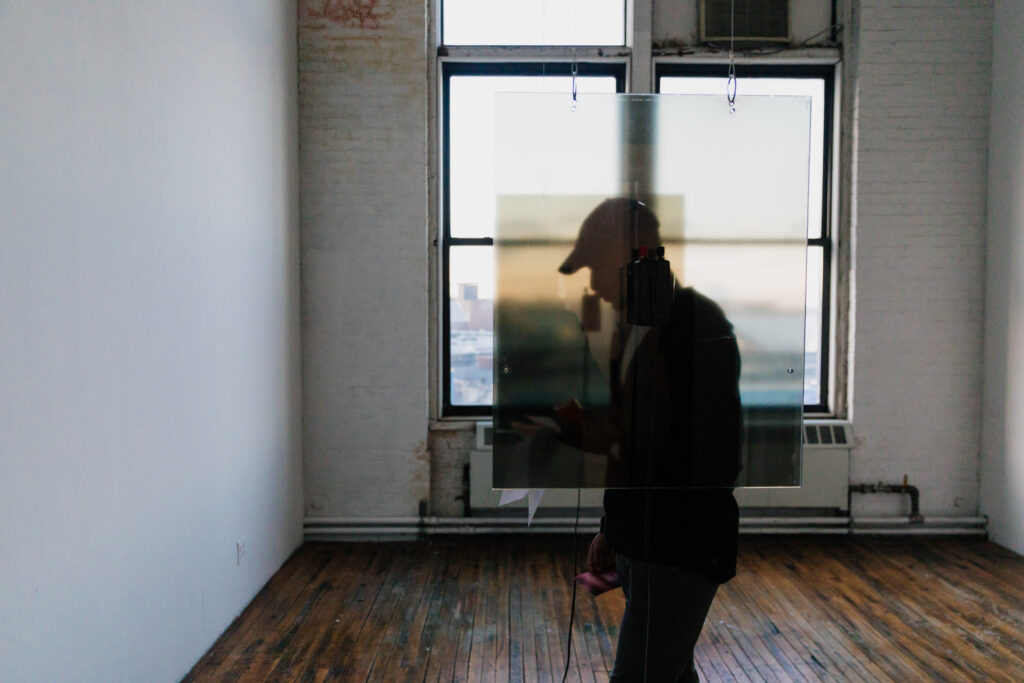
Eija-Liisa Ahtila, Horizontal, 2011. Saastamoinen Foundation Art Collection © Ari Karttunen / EMMA
Shohreh Shakoory, a Berlin-based Iranian-German researcher, art historian, and curator, began her research at EMMA in September 2025 as the first recipient of the EMMA-Saastamoinen Curatorial Fellowship. The six-month fellowship granted access to Saastamoinen Foundation’s Art Collection of nearly 3,000 artworks, EMMA’s multidisciplinary team, and the freedom to follow her authentic research intuition.
Her article, On Being-With the World: Relational Curating as Practice, is now published on Emma Zone. This genuine piece of curatorial thinking and writing asks how art relates to the world, and why that question matters now.
What Shakoory employs a methodology, a way of approaching a collection that asks how the works they relate to their materials, to the bodies that encounter them, to the histories they carry, and to the futures they imagine.
Shakoory’s framework is relationality, the idea that nothing, no artwork, no body, or identity exists in isolation, but is exists only through its connections, interwoven with everything else. The concept derives not only from Western critical theory, but also from indigenous cosmologies and postcolonial thought, which Shakoory approaches with both intellectual rigor and genuine curiosity. Drawing on the thinking of Karen Barad, Donna Haraway, Édouard Glissant and Bruno Latour, she moves through Saastamoinen Foundation’s art collection as though it’s living, tracing the threads that connect works across generations, geographies, and media.
As she writes:
“To read the collection relationally is not simply an academic exercise, but an ethical orientation, a way of remaining accountable to the knots of history, matter, and meaning in which we are all embedded.”
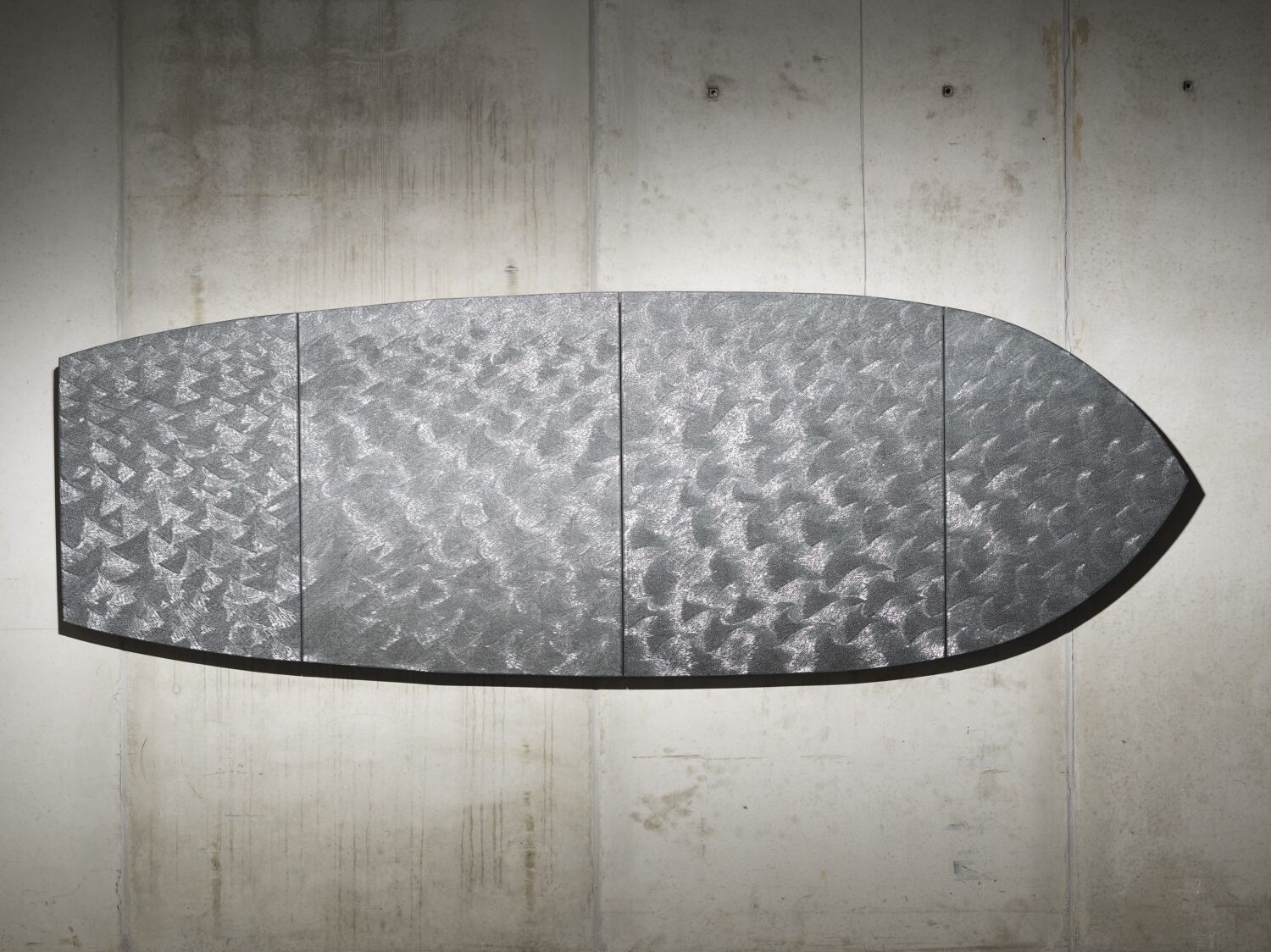
Sasha Huber, Sea of the Lost, 2016. © Ari Karttunen / EMMA
The essay reads as closely and generously as the collection deserves.
Eija-Liisa Ahtila‘s multi-screen installations are examined as challenges to the fiction of a single, objective viewpoint. Pierre Huyghe‘s a sculpture submerged in an aquarium with living starfish, Abyssal Plane, becomes a meditation on what it means for an artwork to exist and generate meaning without a human observer. Jenna Sutela‘s bacterial neural network, Jani Ruscica‘s compulsive typographic bodies, Charlie Prodger‘s diary-like video essay, Lynn Hershman-Leeson‘s pioneering digital personas, Sasha Huber‘s stapled boat in memory of the Middle Passage, and Dzamil Kamanger‘s beaded passports. Each work is observed with precision and care, and each illuminates something about the collection as a whole.
The final section of the essay is perhaps its most powerful. Shakoory turns to two works that sit with historical trauma without resolving it.
Sasha Huber‘s work, The Sea of the Lost (2016), a wooden boat-shaped sculpture whose surface is covered with thousands of metal staples in memory of the approximately two million enslaved Africans who did not survive the Middle Passage, and Dzamil Kamanger’s The Russian Empire Passport, one of a series of meticulously beaded passports that question the legitimacy of borders, empires, and the bureaucratic regimes that determine who belongs and who does not.
Both works, Shakoory argues, stage the presence of bodies through their absence and both offer not reconciliation or easy hope, but a way of staying with the wound, of building from the break, of making kinship across ruptures that were designed to isolate.
Drawing on Édouard Glissant‘s theory of creolisation and errantry, she shows how these works give form to identities that are multiple, dynamic, and rooted in relation. These identities are forged through displacement, trauma, and the refusal to be erased.
Shakoory offers a methodology, a way of approaching a collection that asks how the works they relate to their materials, to the bodies that encounter them, to the histories they carry, and to the futures they imagine.
She takes seriously the idea that art is always a situation where bodies, technologies, histories, and forms of knowledge meet and negotiate.
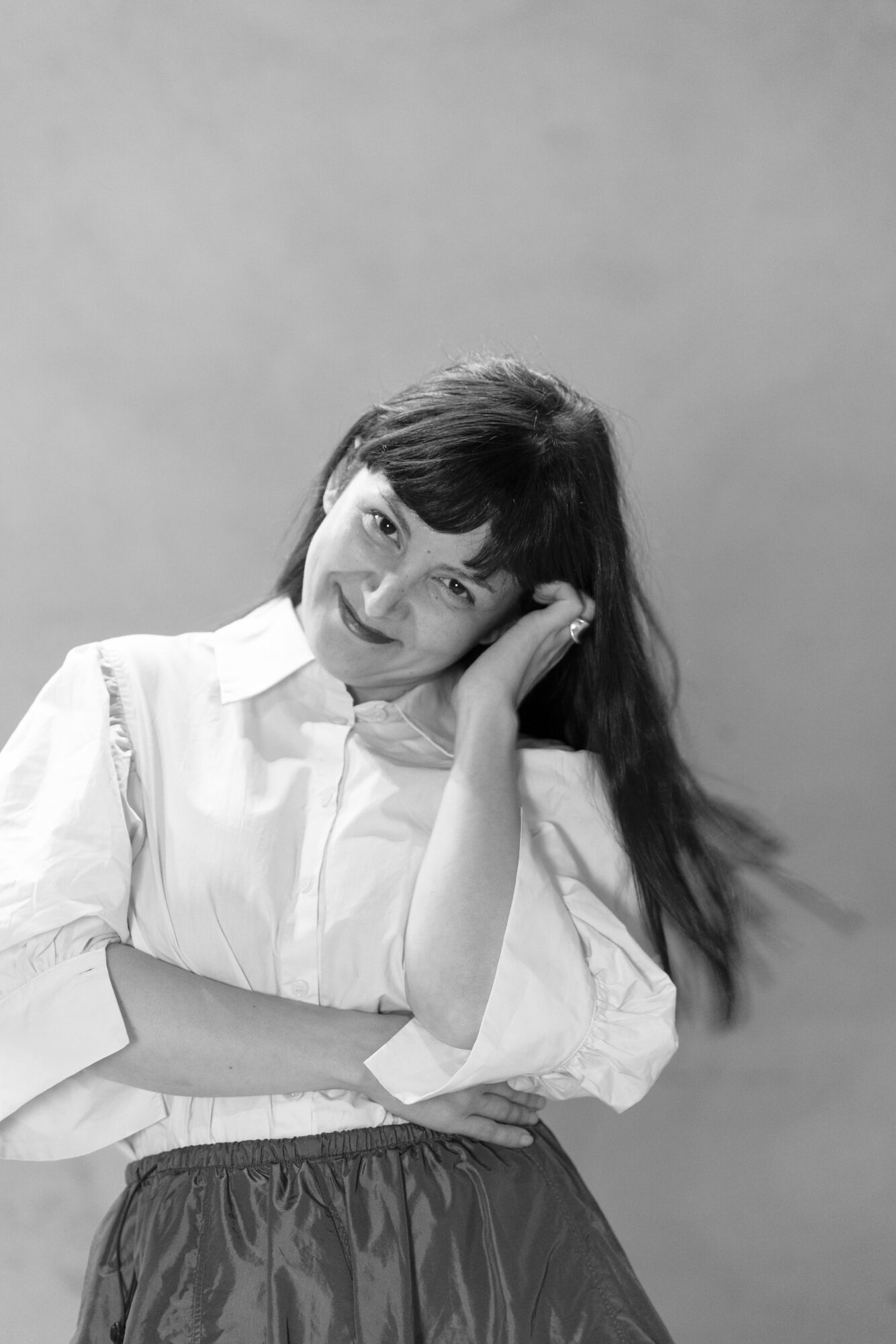
Shohreh Shakoory. © Ari Karttunen / EMMA
Shohreh Shakoory is an Iranian-German researcher, art historian and curator. She holds a BA in Art History from Rome, an MFA in Media Art from Bauhaus University Weimar, and is currently a PhD candidate at the University of Fine Arts Hamburg (HfBK). Shakoory has worked as a curator, producer, researcher, and mediator with institutions including Haus der Kulturen der Welt (HKW), Savvy Contemporary, Kunstraum Kreuzberg/Bethanien, Sinema Transtopia, and HfBK, contributing to numerous academic conferences and seminars. In addition to her institutional work, she practices sculpture and painting.
EMMA-Saastamoinen Curatorial Fellowship is a three-year programme, established jointly by Saastamoinen Foundation and EMMA – Espoo Museum of Modern Art. Each year, an international curator is invited to Finland for a six-month paid residency, working as part of EMMA’s team and conducting independent research into the Saastamoinen Foundation Art Collection.
Shohreh Shakoory was selected from over 170 applications worldwide. During her stay in Finland, she lived in the HIAP – Helsinki International Artist Programme residency at Suomenlinna. The program continues, and the open application for the EMMA-Saastamoinen Curatorial Fellowship will be announced later.