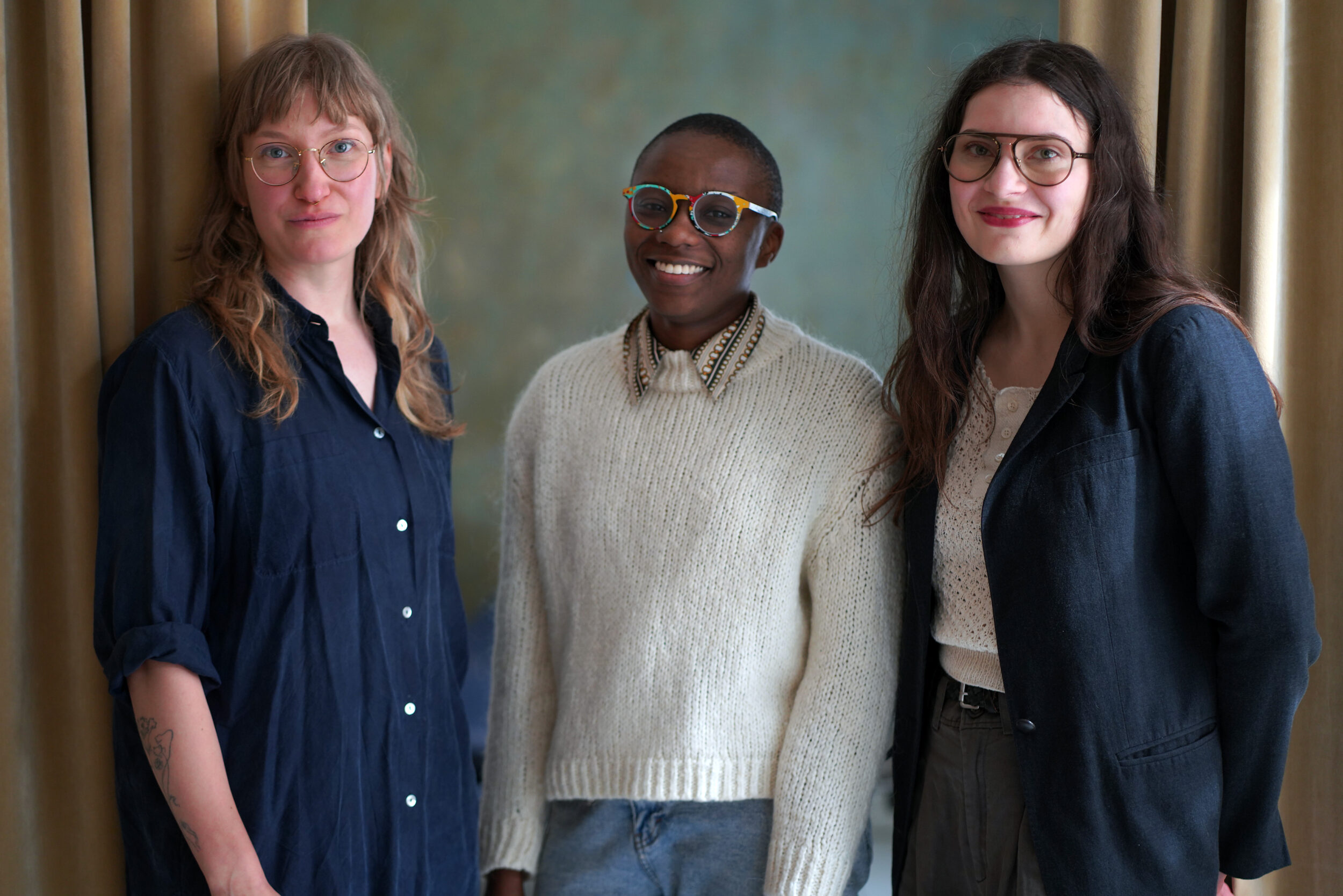
In 2025, Uniarts Helsinki alumni Anna Karima Wane, Lotta Hurnanen, and Priss Niinikoski were awarded Saastamoinen Foundation residencies in internationally renowned programmes. Each artist brings a distinct perspective to their practice, spanning community-based art, experimental film, and interdisciplinary research across textiles, sound, and technology. In the interviews, the artists reflect on their journeys, the ideas driving their work, and what they hope to explore during their upcoming residencies.
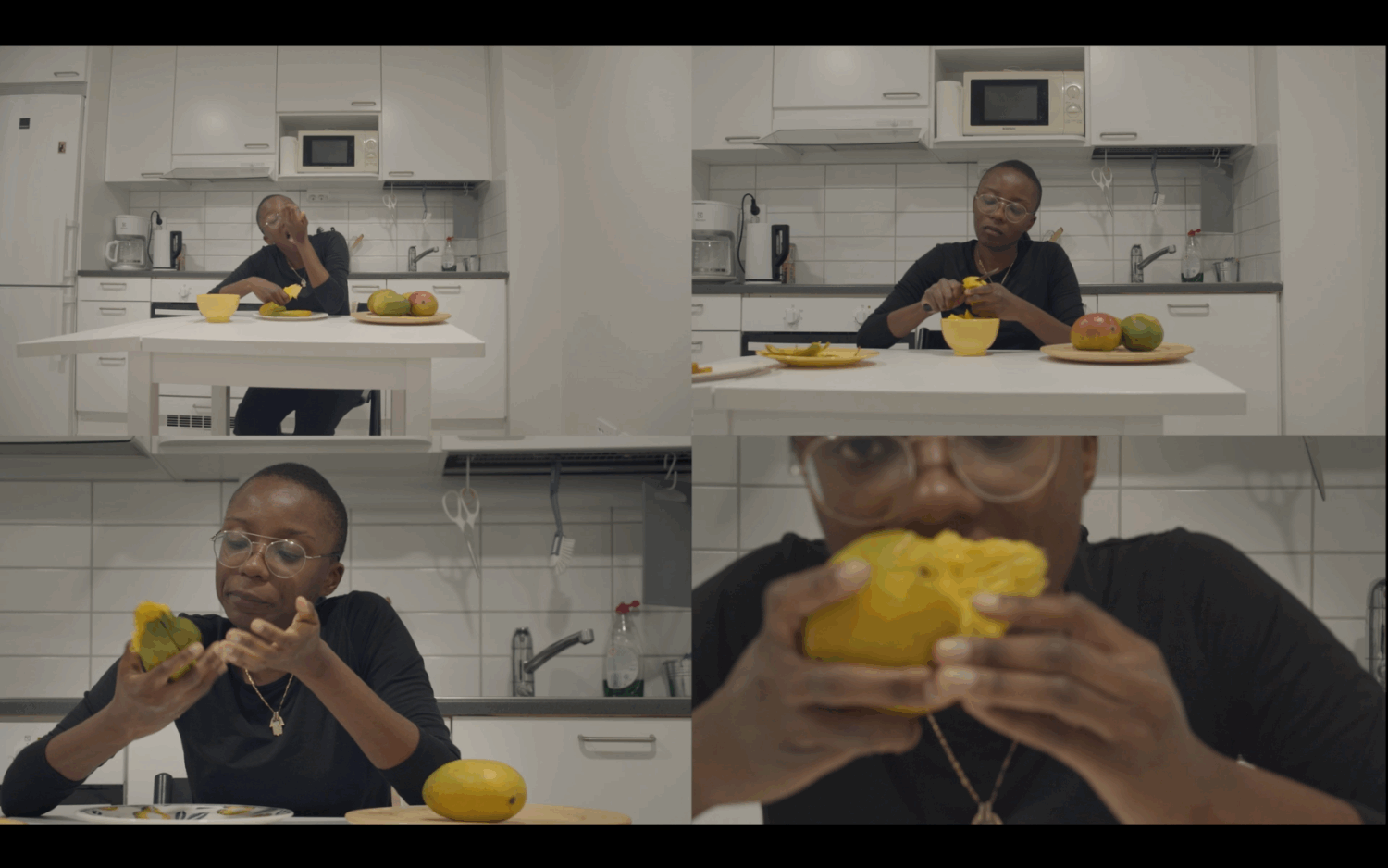
Stills from videowork How to Eat a Mango, 2023. Courtesy of the artist.
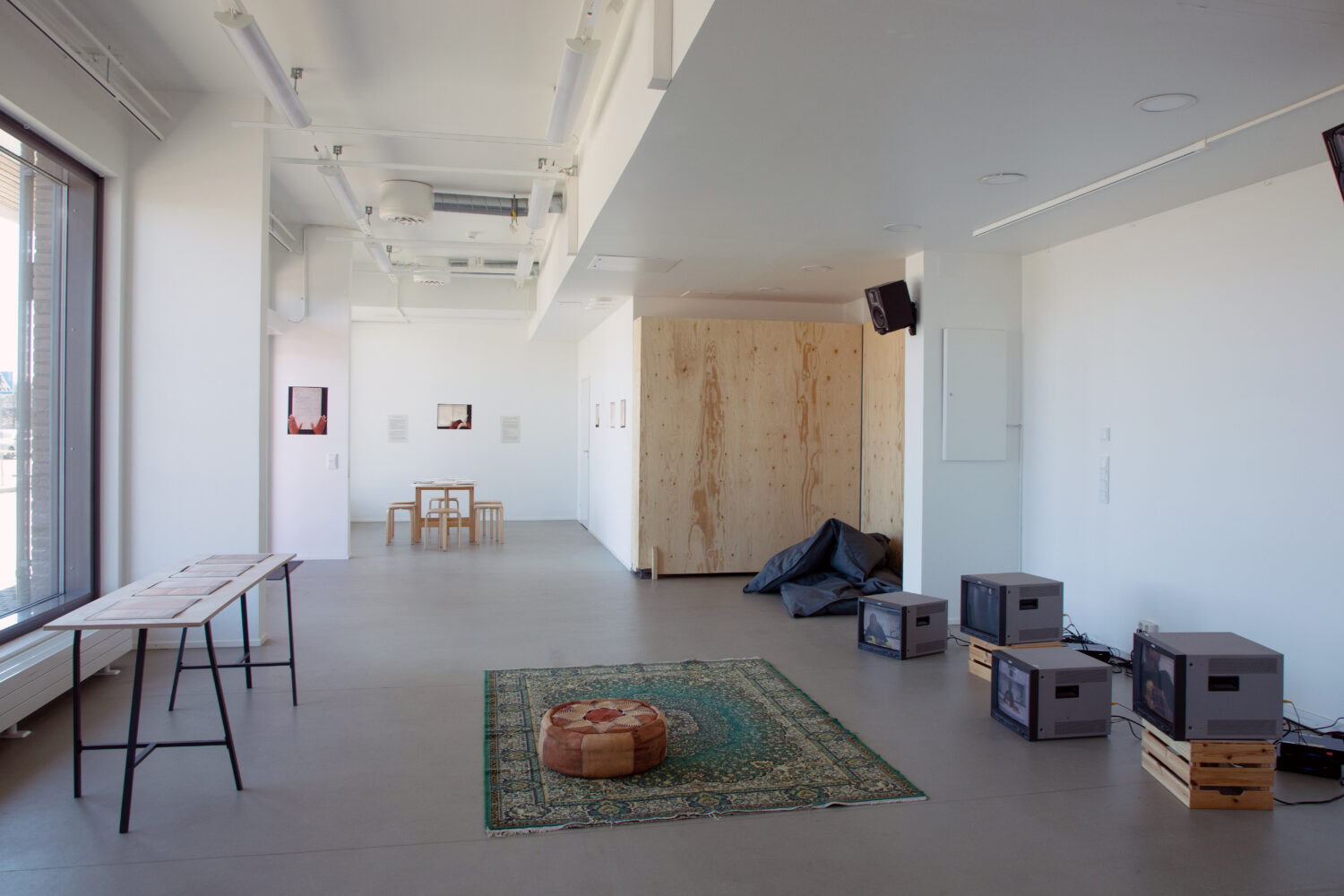
Installation view of a rememory that belongs to somebody else at the Museum of Impossible Forms, May 2024. Photo: Rong Ci-Zhang.
Anna Karima Wane Builds a Community Through Art
Anna Karima Wane, whose practice encompasses video, experimental documentary and socially engaged art, has been selected for an 11-month residency at the Jan van Eyck Academie in Maastricht, starting in January 2026. Originally from Dakar, Senegal, the artist, curator and educator is now building her own community in Finland.
Wane arrived in Finland by chance but chose to stay deliberately.
“I didn’t move to Finland – I moved away from Dakar,” Wane says with a laugh. “I had been back home [in Dakar, Senegal] for a few years, working on different projects and I wanted to work on my own stuff and develop my practice. Kuva [the Academy of Fine Arts] was the first school I applied to. When I received the decision on my admittance, I thought ‘I guess I’m going to Finland’!”
Wane had previously completed her undergraduate studies at Yale in the United States. Though academically prestigious, her experience was complicated by experiences of racism and a sense of not belonging. In Yale, she changed her major from film studies to fine arts. When asked to compare Yale and the Academy of Fine Arts Helsinki, she says one of the differences is cultural. In the US, there is a culture of sharing and receiving feedback as well as protesting. The Finnish, in turn, can be nonconfrontational to a fault – which can lead to issues being left unaddressed.
” Yale is huge, whereas Kuva is small, more intimate. Biggest difference is the conversation culture. The culture of giving feedback, complaining and protesting. Those things are very different in these spaces [between the US and Finland].
“In the US, you are always made aware of your difference, of being ‘other.’ Here [in Finland] people want to say that we’re all the same, which is not true. Just at the very basic level, moving to this country was not easy. There was not a lot of support in terms of how we were welcomed as international students. We basically had to crowdsource the information between international students because nobody told you things like you need this to get a bank account, you need an ID, things like that.”
Wane sees that, already, positive change has taken place. Describing herself as outspoken, she has actively contributed to improving the situation of international students at the Academy of Fine Arts.
“I feel like already in the two years since my peers and I have been here things have changed for international students.”
“There’s a lot of work to do.”
The residency selection committee was impressed by Wane’s thought-provoking work, her global outlook, and her collaborative, community-based approach. The artist has worked extensively within the art scene in Senegal and emphasises the importance of understanding how different contexts shape notions of community.
Two years in Finland have also brought positive experiences.
“I’ve had good conversations and found a sense of community. I went home in November last year, and everyone asked why I would go back to Finland. I said I actually feel like I want to be there, and I’m choosing to be here, which I think is very important.”
Currently, Wane is working at the Helsinki International Artist Programme (HIAP) as a Residency Assistant as well as working on her own projects such as teaching at Art School Maa.
“There’s a lot of work to do. And I’m one of those people who think ‘Okay, let’s go.’”
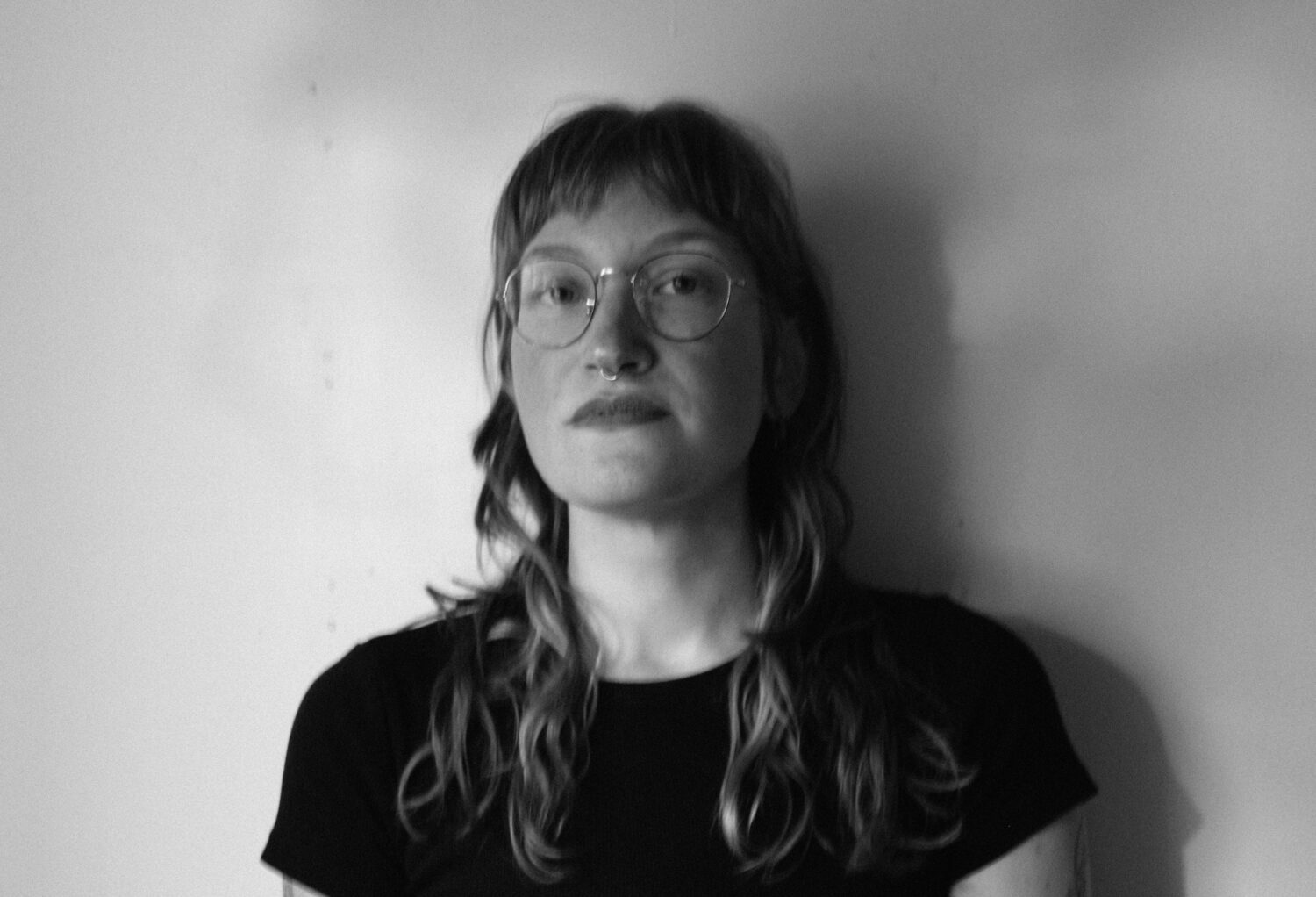
Lotta Hurnanen.
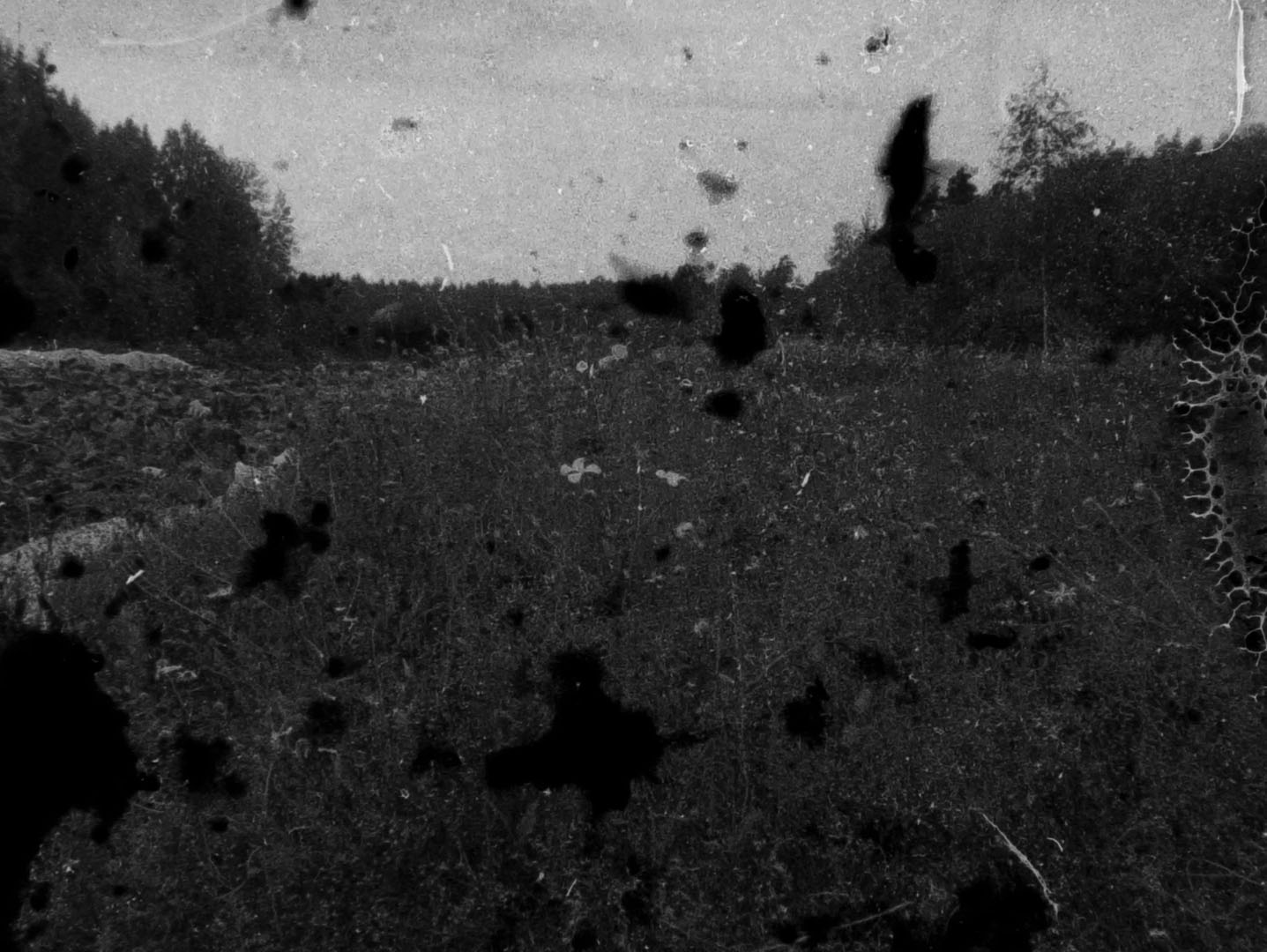
Photo: Lotta Hurnanen.
Lotta Hurnanen Intertwines Analogue Film and Gardening
Artist and gardener Lotta Hurnanen, who works with experimental film, has been selected for the Liaison of Independent Filmmakers of Toronto (LIFT) residency programme. The three-month residency will begin in December 2025. At LIFT, known for its expertise in experimental filmmaking, Hurnanen plans to deepen her understanding of various photochemical processes by exploring the relationship between landscape and materiality.
Hurnanen’s practice weaves together visual art, agriculture, and the logic of slow processes. She is fascinated by the physicality and organic nature of analogue film. First, she began working with printmaking, and her interest in moving image began during her undergraduate studies. Since it has evolved into a dedicated focus on analogue filmmaking.
“There’s something very similar about printmaking and film – the processes and working with the chemicals and lots of different stages. You have to think lot of steps ahead and see the changes from negative to positive or positive to negative of different colours,” she explains.
During the LIFT residency, she will delve further into the connections between landscape and materiality through photochemical experimentation. The residency selection committee was impressed by her ambitious approach and her experimental exploration of film chemistry and microbial expression.
A Deep Connection to the Land
Hurnanen’s work conveys a deep connection to the land, both visually and physically.
“I engage with other living beings than humans, as well as places and environments. Then I also work as a gardener, half a year usually. It’s my other profession.”
Her artistic practice engages in more-than-human world: other living beings, places and environments. Not only does she work as a gardener during the summer season, but soil care itself is an integral part of her artistic work. She tends to an old family field, where soil regeneration has become a long-term art project. Through this work, she documents the process over time.
“I have this long-term project that is about soil regeneration in my family’s old field that I am taking care of. I also film the process and document it through film. The result is film material that comes out of it but there are also concrete changes in the landscape and in the soil structure as well as the plants I tend.”
According to Hurnanen, analogue film and gardening are kindred practices. Both requiring time, an awareness of rhythm, and patience.
“There is something similar about these practises [analogue filmmaking and gardening], I would say. You do something and then you wait around and see how it changes and then you maybe do another thing and then you have to wait and let things grow. And sometimes there are phases when you have to work really intensively and then you have to kind of let things just cook by themselves.”
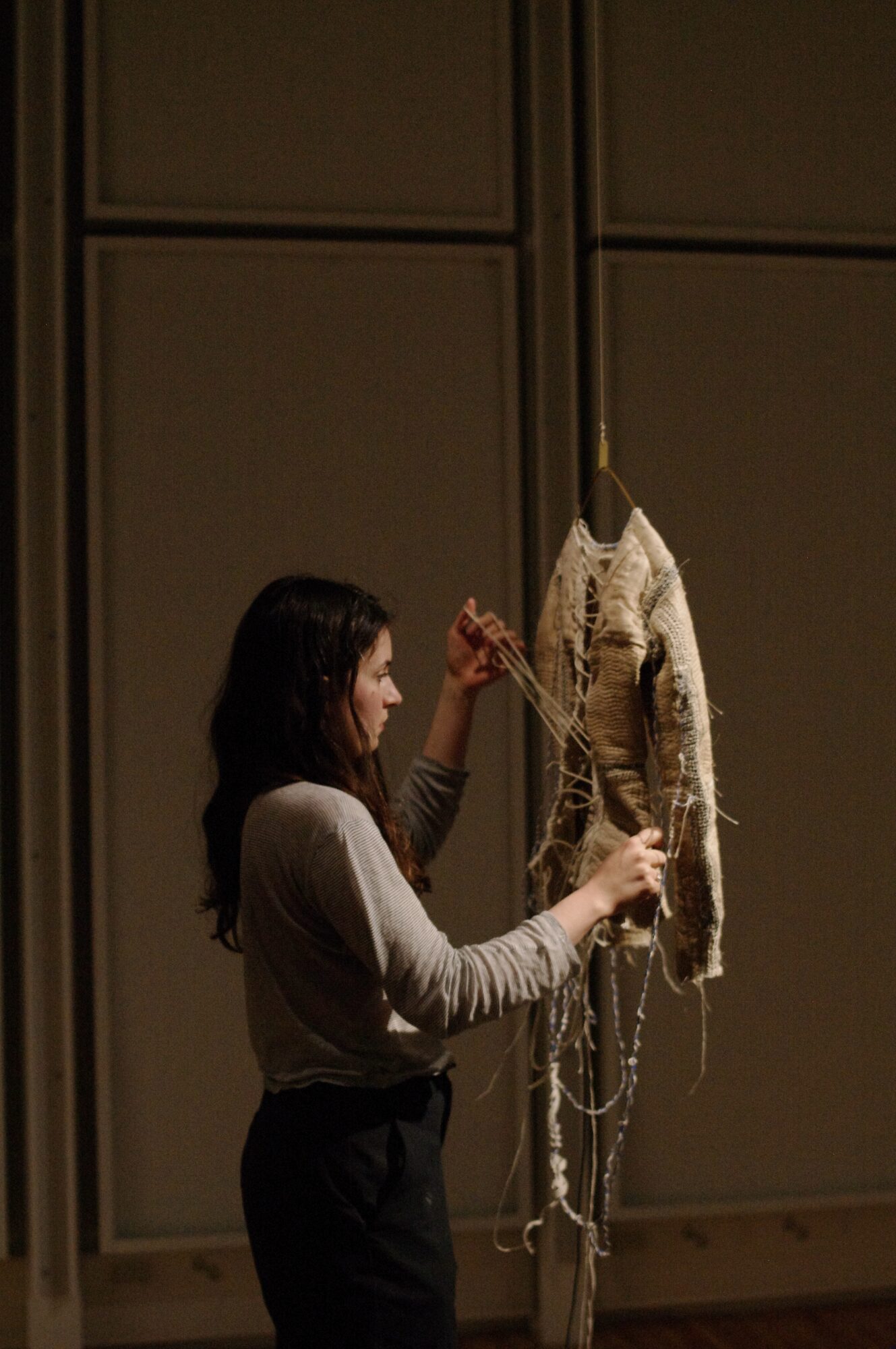
Priss Niinikoski, Sonic Mediations, 2025. Photo: Saara Vuola.
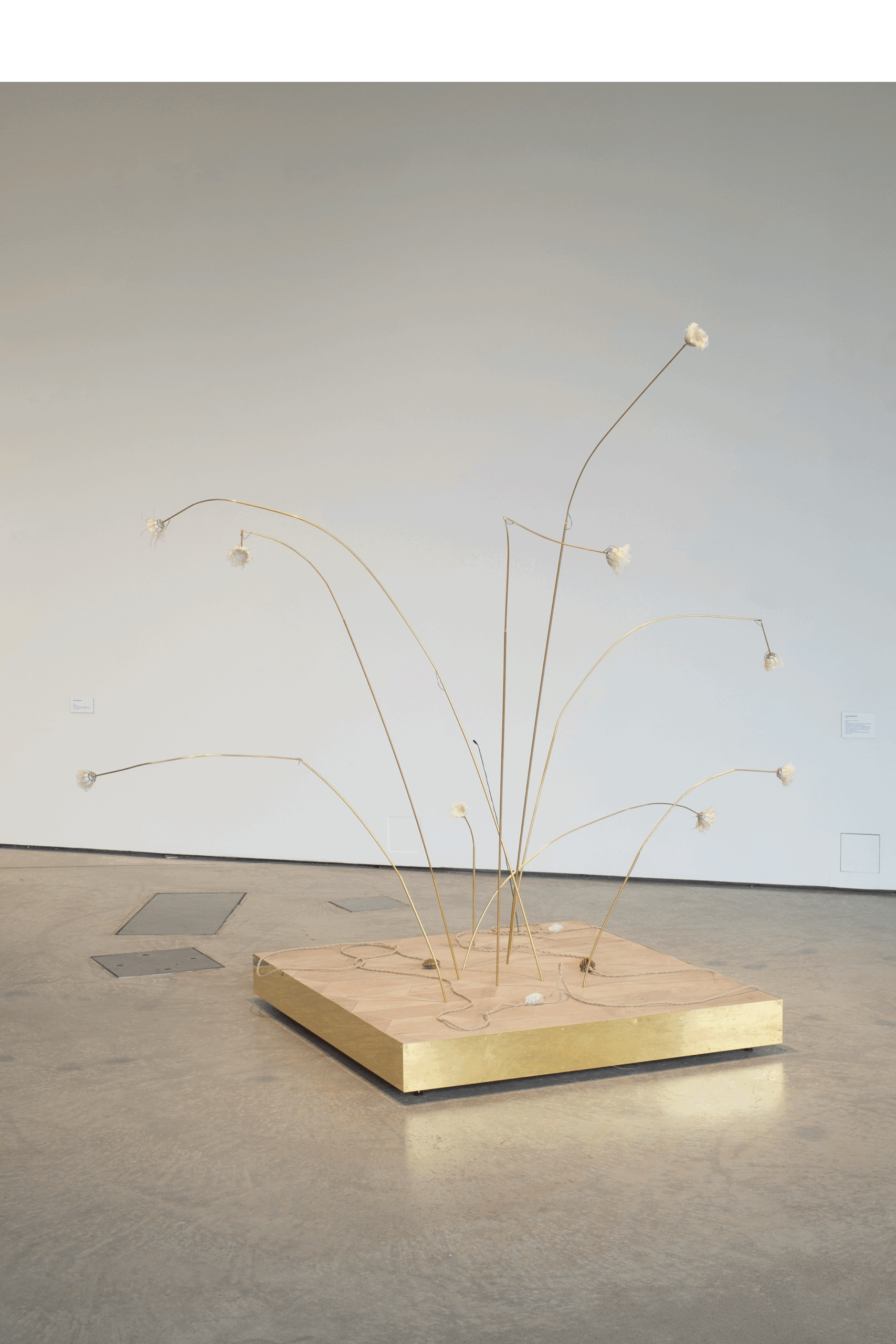
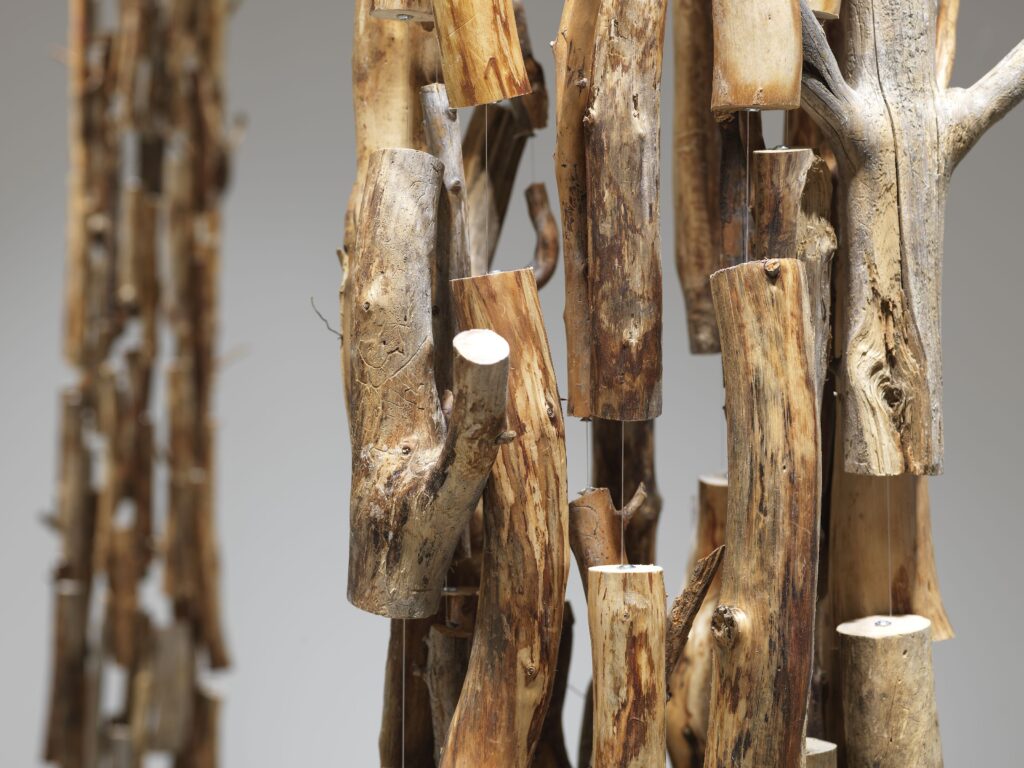
Priss Niinikoski, Automata (on a land lot), 2025. A site-specific sound installation. Photo: Priss Niinikoski.
Priss Niinikoski on Being Between Materials and Mediums
Finnish-French artist Priss Niinikoski has been awarded a place at the Rijksakademie van beeldende kunsten artist residency in Amsterdam. The two-year programme will begin in January 2026.
Working at the intersection of technology, sound, and textiles, Niinikoski draws deeply on the histories of the women in her family. Her connection to textiles, in particular, is a generational thread.
“I come from a family of strong women, many of whom have worked professionally in textile industries all in different ways,” she says.
From a young age, textiles fascinated her – not so much the industry, but the material itself and its structures. “I remember thinking that learning to read knitting instructions was like learning a language – one that grew more and more complex as the pattern, like lace, became denser.”
At nineteen, Niinikoski enrolled in the prestigious fashion department of the Royal Academy of Fine Arts in Antwerp, renowned for producing the avant-garde Antwerp Six in the 1980s. The programme was both artistic and rigorous, with students evaluated annually and many dismissed. The experience taught her resilience and how to handle critique.
“The Academy is very special since students are trained more like artists than designers. But it was also like the army – only for fashion,” she recalls. “You might expect competitiveness among the students, but there wasn’t. We were all in the same boat, pushing ourselves over the limits and further together.”
Her time in Antwerp broadened her perspective. Immersed in an environment rich with artistic and theoretical influences, she became increasingly drawn to research-based practices. When struggling to connect artistic research and fashion one teacher encouraged her to think outside the box. “I really was stuck in thinking that there was just one career ladder, but critically approaching it, I began to consider the possibility of becoming an artist.”
“It’s interesting that even working in the field (fashion], art is often used as a reference both visually but also methodologically. You actually study how different artists conceptually work and then translate that into a commercial wearable garment.”
From Fashion to an Interdisciplinary Art Practice
In 2021, Niinikoski was selected as one of the finalists at the International festival of Fashion, Accessories and Photography Hyeres, where she had the opportunity to show her collection to a wide network of industry professionals taking place in Villa Noailles, France.
After the competition she had a short period working in the fashion industry, not too long to realise that the job really wasn’t a place to question prevailing systems.
“I felt that my interest in textiles and culture had to go deeper, I had many questions and wasn’t really getting answers so I decided to look for them, that’s when I went on to dedicate my time for research and artistic practice.“
Niinikoski shifted her focus fully toward art, enrolling at the Academy of Fine Arts Helsinki. There, while studying sculpture she began combining textiles with electronics, sound and programming, while also developing an interest in performance.
“My practice is very research-based,” she says. “I’ve explored many directions because I want to learn from people across different fields. I think that’s a way to find new synergies.”
Amsterdam now offers new ground for connection.
Niinikoski is especially interested in engaging with the vibrant cultural field of Amsterdam and the strong academic presence of postphenomenology in the Netherlands – a philosophical approach that explores how technology mediates human experience and shapes our interactions with the world.
During her residency, she plans to build on the themes of communication, aesthetics of structures and acoustic performativity. She is particularly interested in how bodies take their places within a space, continuing to work with computational systems in sound and textiles. Perhaps her practice will take a political turn as right now Niinikoski is wondering whose voices are heard, why and how.
About the Saastamoinen Foundation Alumni Residency Programme
The alumni residency programme of the Academy of Fine Arts of the University of the Arts Helsinki offers artists the opportunity to further their practice and expand their professional networks through fully funded residencies at renowned international residency centers.
Established in 2015, the programme is celebrating its 10th anniversary this year. Already in 2015, the resident for the ISCP programme was nominated by a jury consisting of renowned international professionals in the field of arts. The same concept of has continued for the past ten years.
The programme includes partnership residencies with the following organisations: ISCP – International Studio & Curatorial Program (New York, USA), LIFT – Liaison of Independent Filmmakers of Toronto (Canada), joint residency of Cove Park and Scottish Sculpture Workshop (Scotland), and Jan van Eyck Academie (Maastricht, the Netherlands).
Each year, one artist is selected for each residency. The selections are organised four times annually – two in the spring and two in the autumn. A three-member international jury carries out the pre-selection for each round, with two members drawn from the international curatorial field and one from the Academy of Fine Arts. The final decision is made by the hosting residency organisation.
In addition to these four residencies, the Foundation also enables one artist to take up a fully funded residency at the Rijksakademie van beeldende kunsten in Amsterdam, provided they are accepted through the academy’s independent selection process.
Read more about the alumni residency programme here.
Related news
PRISS NIINIKOSKI SELECTED FOR THE 2026-2027 RIJKSAKADEMIE VAN BEELDENDE KUNSTEN RESIDENCY