Saastamoinen Foundation supports research on sustainability law and economics at the University of Eastern Finland with EUR 1.7 million for the period 2024–2028. The support enables research that advances the coexistence of nature and society in a just and economically sustainable way.
The economy and the environment are in constant interaction, but the principles that govern them are fundamentally different. While the economy can adapt to changing circumstances, the biological processes of the environment follow their own terms. Research on sustainability law and economics at the University of Eastern Finland examines these dependencies by producing both theoretical and practical knowledge.
One central way to understanding these connections is the development of FINGREEN, an ecological macroeconomic model adapted to the Finnish context. The work is linked to the broader SISU research consortium, which focuses on sufficiency solutions to promote a sustainable and equitable green transition.
FINGREEN macroeconomic model as a tool for societal decision-making
Traditional macroeconomic models have not sufficiently accounted for the impacts of the economy on the environment, nor for the impacts of environmental changes on the economy. The new model broadens the scope to encompass both climate emissions and biodiversity impacts, deepening our understanding of the dependencies between the economy and nature.
The model aims to support decision-making by providing an understanding of the interactions of various policy measures as part of the sustainability transition. It is particularly important to be able to assess how nature restoration and sufficiency solutions could be enabled at a broader scale. In Finland, the FINGREEN model is being developed in cooperation with stakeholders in a way that in the future it could serve as an additional tool for different ministries.
“We are studying ways to secure the well-being of people and the environment regardless of economic growth. In this way, we can open new opportunities for policymakers, businesses and citizens alike,” says Teemu Koskimäki, Postdoctoral Researcher at the University of Eastern Finland. He coordinates the research group applying the FINGREEN model to Finnish conditions and leads a cross-university team exploring how sufficiency solutions can help address sustainability challenges.
FINGREEN is an adapted version of the EUROGREEN model developed at the University of Pisa. This internationally acclaimed model is also being applied to support sustainability thinking in France, Italy, Brazil and Germany. Researchers at the University of Eastern Finland work in close cooperation as part of an international network of research groups.
“The more countries incorporate sufficiency solutions and environmental thinking into their decision-making, the greater the positive impact on our planet’s carrying capacity and on the well-being of future generations will be,” Koskimäki adds.
Running waters as a practical application: making trade-offs visible
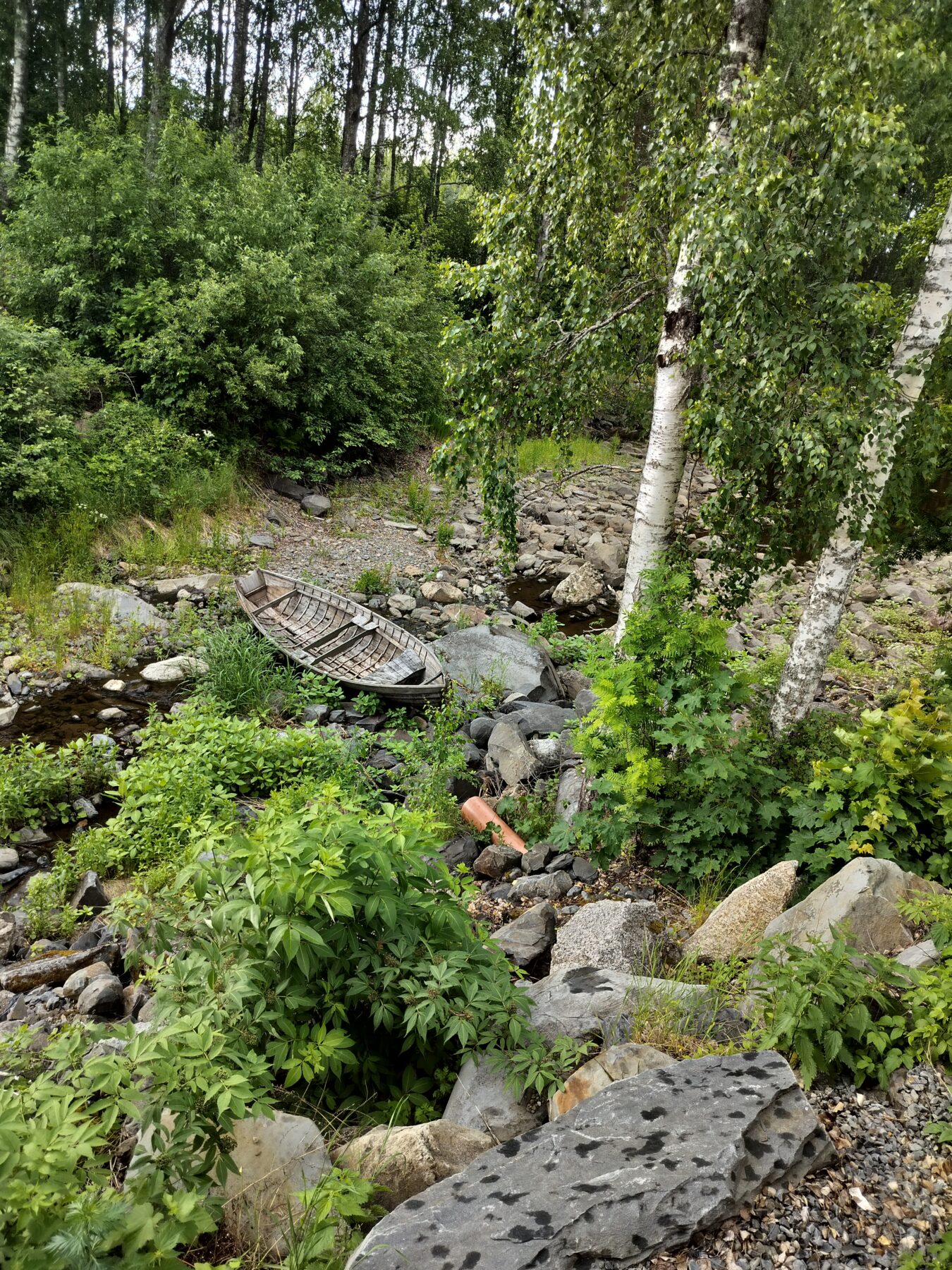
While FINGREEN examines sustainability on a national economic scale, sustainability research at the University of Eastern Finland also extends to concrete challenges at a local level. Antti Iho, Research Director at the University of Eastern Finland, studies the economic and ecological impacts of restoring water bodies, the effects of hydropower on biodiversity, and the removal of migration barriers, particularly in running water ecosystems.
Iho is involved in the NOUSU programme, coordinated by the Ministry of Agriculture and Forestry, which aims to halt the genetic decline of migratory fish populations and enable the natural life cycle of fish, for example, by purchasing and dismantling small hydropower plants and restoring running waters. The programme uses a set of economic valuation indicators to support decision-making.
Iho’s research makes the trade-offs between different solutions visible and helps decision-makers understand what is lost and what is gained in each scenario. When a small hydropower plant is dismantled, the modelling helps in clarifying the trade-offs involved: what the decision means for private economic interests, how it affects the electricity grid, and what benefits it brings to nature. Iho is personally involved in negotiations concerning NOUSU sites, helping to determine the value of each site. The work is both a continuous process of developing the approach in practice and an example of strategic university research being brought directly into the heart of societal decision-making.
“Restoring running waters is ultimately a matter of life and death. The survival of people and societies depends on how we respond and adapt to inevitable change,” Antti Iho emphasises.
Saastamoinen Foundation’s support at the core of sustainability thinking
Research on sustainability law and economics requires determined, long-term commitment. Saastamoinen Foundation’s support plays a crucial part not only in the development of an ecological macroeconomic model, but also in building a broader research strategy.
The scientific goal of the project is to develop an ambitious methodological framework for assessing the micro- and macroeconomic as well as the legal leeway in sustainability, and to examine what an economic system focused on sustainable well-being and nature restoration could look like. Thanks to the Foundation’s support, research carried out at the University of Eastern Finland is better equipped to respond to societal needs.
“As the world changes, it is important that societal institutions do not inhibit change but instead support a fair transition. Without Saastamoinen Foundation’s long-term commitment, our scientific research would not be possible at the same level,” Antti Iho concludes.