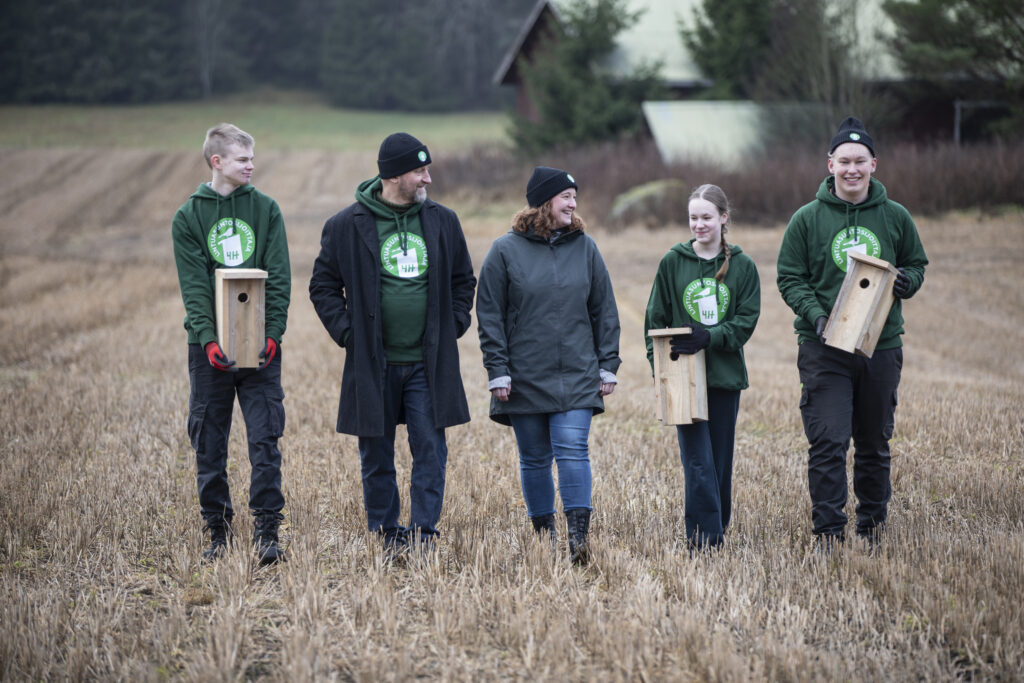

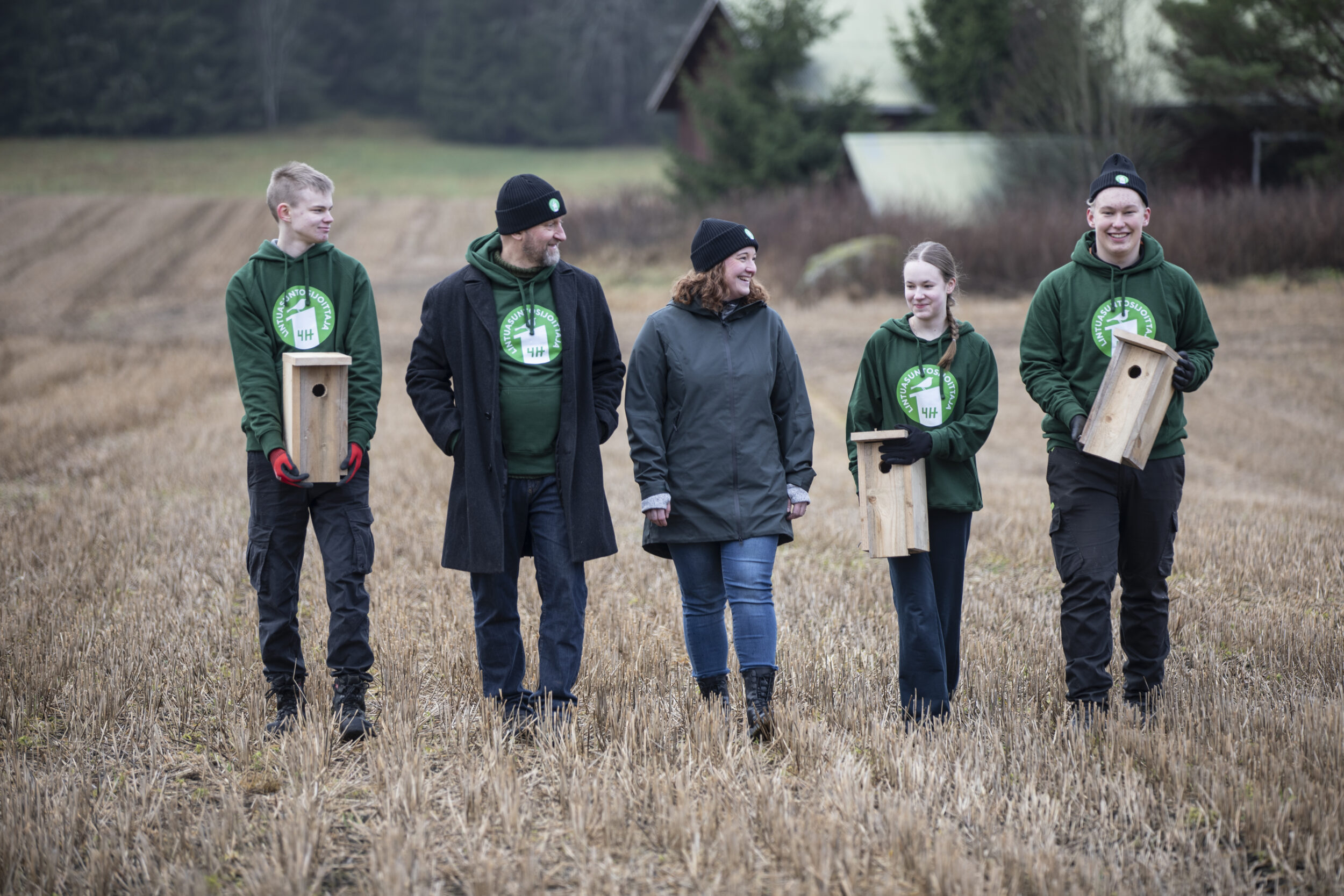
4H Finland has launched Lintuasuntosijoittajat (Bird Home Investors), an initiative in which young 4H entrepreneurs build homes for birds and place them in areas where nesting sites are scarce. Partner companies and organisations act as the investors. Between 2026 and 2028, young people will build at least 3,600 nest boxes and install them in Finnish nature.
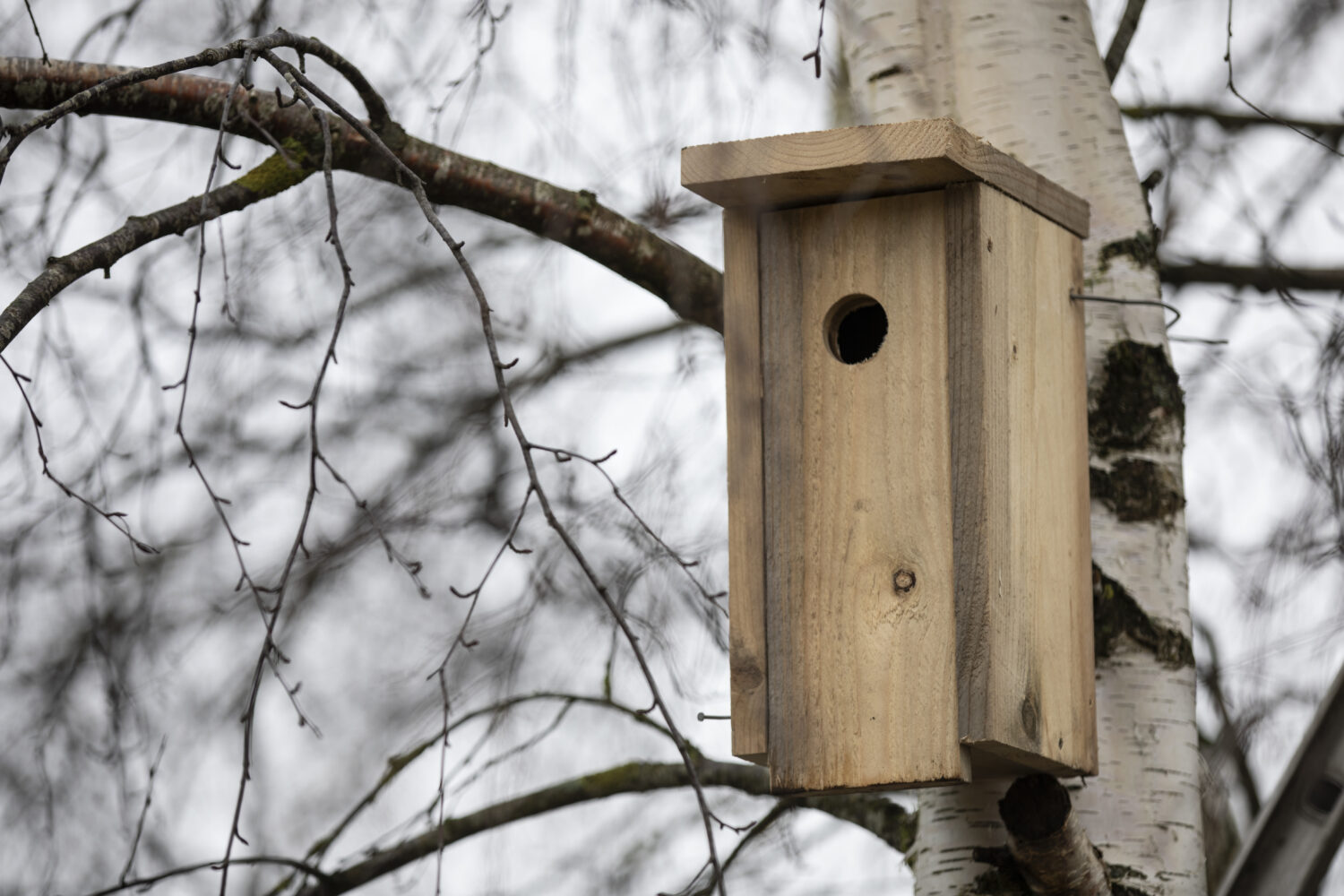
Photo: Tiina Rinne, 4H Finland
Many bird species in Finland suffer from a shortage of nesting sites. The initiative supports both young people’s entrepreneurship skills and biodiversity. Its patron is the President of the Republic, Alexander Stubb.
Young 4H entrepreneurs build the bird homes and install them where nesting sites are needed, working with landowners and expert organisations. In the first phase, the work focuses on agricultural landscapes, wetland areas and nature management sites in commercial forests. In these habitats, nest boxes can support declining species such as the common starling, common redstart, common goldeneye, willow tit and house sparrow.
“Lintuasuntosijoittajat is an excellent example of supporting young people as they plan their lives. Combining your own entrepreneurship with supporting biodiversity is good advice for us older people too,” says Pekka Pesonen, from the Ministry of Agriculture and Forestry, which is a partner in the initiative.
Impact for nature and species
Species and sites are selected together with experts. The initiative produces visible results quickly: at least 1,200 new nesting sites are created each year, and probably more in the future.
“Birds lack nesting sites in commercial forests, for example, where there are few cavity trees. Well-targeted nest boxes can also help species in other habitats, such as the starling, which has become rare in much of Finland, and the critically endangered common swift, BirdLife’s Bird of the Year, which nests in towns but also in the countryside,” says Tero Toivanen, Conservation Specialist at BirdLife Finland.
Work, skills and a sense of achievement for young people
“Lintuasuntosijoittajat brings together two important things: building young people’s skills and biodiversity. Nest boxes are a clear product for 4H entrepreneurs, and the birds in our environment need them,” says Tuija Ruokolahti, Executive Director of the Hämeenlinna Region 4H Association, which took part in the pilot in autumn 2025.
The bird homes are ordered from young 4H entrepreneurs, who receive €40 for each bird home they build and install.
4H entrepreneurship is a supported model of small-scale entrepreneurship for 13–28-year-olds. It includes completing 4H’s business training. Participants in Lintuasuntosijoittajat also receive training in bird nesting behaviour and in building and installing nest boxes safely. Young people earn their own money and gain the skills to continue working as 4H entrepreneurs.
Sixteen-year-old Tomi Ranki has done many kinds of work on farms as a 4H entrepreneur. Through Lintuasuntosijoittajat, he has built nest boxes for the first time and learned what different species need from their homes.
“It’s important to give young people job opportunities, and when you get to do it as an entrepreneur like this, it maybe encourages you to think you could start your own business as an adult too.”
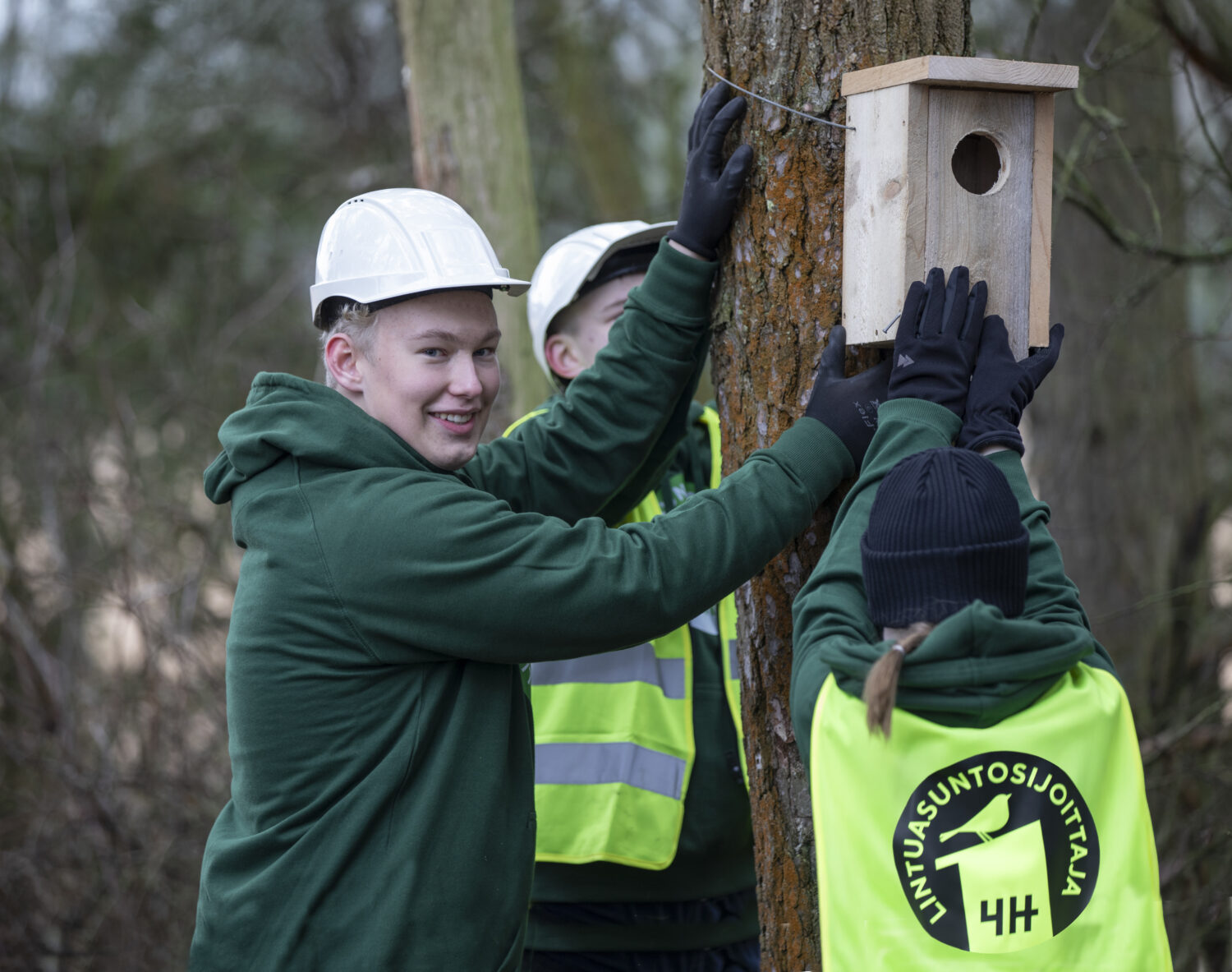
Photo: Tiina Rinne, 4H Finland
“It’s important to give young people job opportunities, and when you get to do it as an entrepreneur like this, it maybe encourages you to think you could start your own business as an adult too.”
Tomi Ranki, 4H entrepreneur
Funders and partners supporting an important cause
Lintuasuntosijoittajat is carried out in broad collaboration. Partners, funders and expert organisations support the choice of species, the search for sites and the practical work.
In the first phase, supporters include BirdLife Finland, the Finnish Hunters’ Association, MTK (the Central Union of Agricultural Producers and Forest Owners), Finsilva, Metsähallitus and the Ministry of Agriculture and Forestry. Funding from the Saastamoinen Foundation for 2025–2028 has made it possible to develop, pilot and expand the initiative.
“Saastamoinen Foundation has been involved in Lintuasuntosijoittajat since the pilot. The initiative gives young people experience of entrepreneurship and work that supports biodiversity. We believe the sense of achievement young people gain through activities that strengthen their relationship with nature will carry them into adulthood,” says Anton Karttunen, Member of the Board of Saastamoinen Foundation.
The City of Espoo has also joined, becoming the first municipality in Finland to support Lintuasuntosijoittajat.
“Lintuasuntosijoittajat brings together two goals that matter to Espoo: strengthening biodiversity and supporting youth employment. Working with the Espoo 4H, we can create more suitable nesting sites for birds while giving young people valuable work experience and entrepreneurship skills,” says Environmental Specialist Anna Hakala.
“In Espoo, the initiative is being launched with funding from the Sustainable and Nature-friendly Espoo and the Espoo for Businesses and Entrepreneurship development programmes. The aim is for the young people involved to develop their work independently in the future and find new funders and customers. Some of them may also be inspired to pursue nature management as a career,” Hakala continues.
Target: at least 1,200 bird homes a year
In autumn 2026, Lintuasuntosijoittajat is starting up around Finland, in addition to Espoo and Punkalaidun, including in Heinola, Huittinen, the Hämeenlinna region and Mänttä-Vilppula.
The aim is to install at least 1,200 bird homes across Finland this year and to employ 70–120 young 4H entrepreneurs. The initiative will expand in stages, and organisations will be able to invest from autumn 2026 onwards.
Lintuasuntosijoittajat will culminate in 2028, 4H’s centenary year, when Finland’s forests will have at least 3,600 new homes for birds. The goal is a lasting model that strengthens biodiversity and young people’s opportunities beyond the anniversary year.